

OpinionGovernmentLaw and Order
Police reforms: creative dialogue needed
The Police Act Drafting Committee's term came to an end on 31 January. Any significant attempt to reform the Indian police must begin with the men at the bottom, the constabulary, not at the top. However, such changes would call for a struggle against the nature of Indian society itself, says former IPS officer K S Subramanian.
In a recent article on India Together, Arvind Verma, a former IPS officer, now a US-based scholar, has ably and cogently examined the issue of police reforms in India today together with his recommendations. Based on years of study and research, he makes an irrefutable case for the necessity of police reforms.
The Prime Minister and his advisers, responsible for the recent setting up of the Police Act Drafting Committee (PADC), led by Soli Sorabji, should be happy to read Verma’s paper, which views the issue from a rare international perspective. Verma has made an important contribution to the debate on police reforms. As a retired police officer who had been part of the system in India for long, I am interested in contributing to this debate.
Committee’s terms of reference too narrow
Several issues arise. What is significance of the present designation of the PADC, which seems to restrict the scope of the needed police reforms in India to the drafting of a new Police Act as if this in itself would automatically also address the host of ills that afflict the Indian police system? What about the range of other issues that were painstakingly gone into by the first ever National Police Commission (NPC) in independent India whose uncared for recommendations (1979-81) lie buried in the dark caverns of the Union Home Ministry?
The restrictive terms of reference for the UPA government’s Police Act Drafting Committee appear to have been drawn up by someone who lacks understanding of the real challenges before the Indian police.
(The Police Act Drafting Committee completed its 6 month term limit on 31 January 2006.)

Arvind Verma, Police reforms
The terms of reference (TOR) of the PADC are interesting. Its first task is to be the drafting of a new Police Act to meet the challenge of the “growth and spread of insurgency/militancy/naxalism etc.” Secondly, it must help bring an attitudinal change in the police including its working methodology to elicit cooperation of the community and to meet its expectations from the police in a modern, democratic society. Thirdly, it must provide for the use of scientific investigation methods to tackle “futuristic trends and organized crime including cyber crime and technological additions in the hands of criminals etc.” Finally, “the concern for human rights, weaker sections, women and the people belonging to Scheduled Castes/ Scheduled Tribes” must be addressed. One may be pardoned for thinking that the significance of the TOR lies in the implied priority in this listing of tasks, which puts social justice concerns and service provision last in order of importance!
The restrictive TOR for the PADC appear to have been drawn up by someone who lacks understanding of the real challenges before the Indian police. The growth of insurgency, militancy and naxalism is attributable to failure of the state to provide humane development, social justice, and governance as understood in many UN and other similar reports. In civilized societies, the police are seen as an agency for the provision of human security, protection and service to the people in addition to maintaining order. Order maintenance, however, appears to enjoy top priority in India. Police-dominated intelligence agencies, which carry out conflict analysis for the government on issues such as insurgency, militancy and naxalism and dictate government policy, have historically adopted a catchall definition of ‘national security’. This limits the usefulness of such agencies for optimum policy making.
The PADC follows earlier exercises such as the Prakash Singh public interest petition before the Supreme Court of India, the Julio Ribeiro Committee report, the Padhmanabiah Committee report and the recommendations of the National Human Rights Commission on the criminal justice front, not to mention the failed efforts of the then Union Home Minister Indrajit Gupta to implement the main recommendations of the NPC in 1997. Moreover, a fully revised new Police Act was also provided in the voluminous report of the National Police Commission (NPC) of 1979-81. In what respects has that exercise been found deficient?
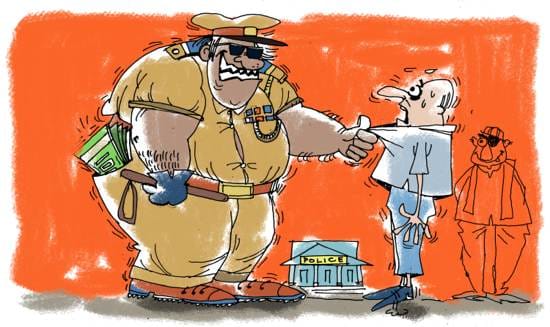
Further, in the recent period, India has witnessed some of the worst communal violence since independence resulting in the total collapse of the criminal justice system and of justice delivery in large parts of the country. The Gujarat carnage of 2002 witnessed the active participation and facilitation by the police in the unprecedented mass violence directed against the minority community. The criminal justice failures and violations on the part of the Gujarat police during the carnage are well documented in the three-volume report of the Concerned Citizens’ Tribunal on Gujarat, led by Justice V R Krishna Iyer, titled “Crime Against Humanity” brought out by the Citizens for Peace and Justice, Mumbai.
The government of India has recently formulated a new law to contain communal violence of the type witnessed in Gujarat. While this does provide evidence of seriousness on the part of the current government in dealing with the problem in a way not provided for in the existing law, this law does not provide for the enforcement of ‘command responsibility’, which was a key issue in the Gujarat carnage of 2002. Command responsibility is that of officials in ‘command positions’ — higher levels in the bureaucracy and the political executive — not just those actually involved in dealing with the law and order situation on the ground. This includes the Commissioner of Police, Director General of Police, Chief Secretary, Chief Minister, Home Secretary, Home Minister, etc. And in the absence of far-reaching police reforms from a human rights perspective, the law may remain toothless in dealing with state-sponsored communal terrorism of the type witnessed in Gujarat, which may well repeat itself in future.
Gravity of the crisis
The TOR for the PADC thus does not adequately reflect the seriousness of the organizational crisis, which afflicts the police system today. This is a crisis which stems from its historical antecedents in the Irish colonial police structure on which it is modeled. The Irish colonial police was a paramilitary agency accountable only to the government. Its chief officer was called inspector general who reported to the chief secretary. The ‘political-organizational’ characteristics of the inherited Indian police structure includes strict subordination to the civilian administration, unaccountability to the public, coercive strength and disposition and frequent use of state violence, institutionalisation of an armed police within the civilian wing, an ‘eyes and ears’ function on behalf of the government, pervasive secrecy and close identification with propertied interests. These characteristics are not sustainable in a democratic, republican India and must be got rid of.
The basic philosophy of the Indian police today is elucidated in the Police Act of 1861. Its primary focus is to contain trouble after it occurs, whether mob violence or individual criminality. It is reactive in dealing with situations except when it is influenced by ‘extraneous’ factors. The contact between policemen and the citizens mainly involve actual or implied enforcement of law; non-enforcement mediation, not involving criminal sanctions, does not often take place. The requirements of maintaining public order and the collection of internal political intelligence have become the basic thrusts of the Indian police. The massive growth of centralized paramilitary police forces and the increasing strength of the intelligence apparatus since independence represent distorted patterns and priorities.
Thus, the challenges on the criminal justice front are not confined to the drafting of a new Police Act, important as it is. A whole range of deeper issues cry out for consideration. These need to be taken into account in the TOR of a reconstituted and renamed Committee with revised terms of reference, which, to carry conviction, must include eminent human rights activists both men and women, members of the Scheduled castes and Tribes, minorities, former Judges of the Supreme Court and activists on the Panchayati Raj front and experts from the northeast, all combined in a compact team. A new Police Act could well become the second most important official policy document after the Constitution of India, and it must be drafted carefully and well!
Consultations held, missed depth
The Commonwealth Human Rights Initiative (CHRI) has been active in campaigning for police reforms in India and has organized many discussions across the country. CHRI held a one-day ‘national consultation’ in New Delhi, which I attended, to consider ‘what must go into creating the police that we want for our country.’ A large number of police officers from across the country were in attendance, though, sadly enough, one did not notice any established human rights activist, man or woman. The PADC was notionally represented by its secretary. Persons who chaired sessions and participated included former governors Ved Marwah and A P Mukherji (both former IPS officers) as well as journalist B G Verghese, and K S Dhillon (IPS Retd.), both associated with CHRI.
The disparity in human quality between the bottom and top ranks of the police hierarchy in India is striking and it reflects the disparity in the larger society.
Arvind Verma, Police reforms
Not all relevant issues, but only three pre-selected themes were discussed, namely, control and superintendence over the police; police complaints agencies; and assessment of police performance. This restricted the scope of the discussion though many issues came up including especially the need for police autonomy. Eminent serving and retired policemen who participated or chaired the sessions talked about police autonomy, which is important, without, however, telling the audience how the phenomenon of human rights violations by the police, including extra-judicial executions, can be brought to an end.
Kamal Kumar, a senior police officer from Andhra Pradesh, spoke quite sincerely and eloquently on police accountability. He however did not mention the subject of extrajudicial executions by the state police! Top-down and elitist concerns prevented bottom up issues from coming up, such as, for instance, the role and position of the constabulary in the police organization. Unfortunately, the many discussions on police reforms organized by CHRI in different parts of India — I read the reports from the ones in Bhopal, Chennai and Thiruvananthapuram in addition the consultation in Delhi — also appear to have ignored such bottom up issues concentrating only on police reforms, sans human rights!
Reforming police from constabulary upwards is key
Take one example. It is known that over ninety percent of all policemen are in the ranks of constables and head constables. The constabulary is ill educated, poorly trained; it lacks initiative and looks up to superior ranks. The disparity in human quality between the bottom and top ranks of the police hierarchy in India is striking and it reflects the disparity in the larger society. Initiative and responsibility are concentrated at the top of the police hierarchy; the bottom layer is not allowed to display such qualities. Thus, the Indian police is said to ‘systematically put its worst foot forward’.
This is not surprising. The Police Commission of 1902 had said that ‘the duties of a constable should be of a mechanical character’. It added that ‘duties requiring the exercise of discretion and judgment’ should not be entrusted to constables, ‘from whom such qualifications cannot be reasonably expected’. Since police recruits learned their duties and an elementary knowledge of colonial law from the ‘Constable’s Catechism’, they were not expected to have an intelligent understanding of their responsibilities. The end of colonial rule in 1947 did not change the role of constables as agents of colonial rule nor reduce their predatory disposition towards the people. Though a ‘despised minority’, because of its predatory activities and its human rights violations, the constabulary remains an exploited section in the police hierarchy.
Any significant attempt to reform the Indian police must therefore begin with the men at the bottom, not at the top. The quality of police performance can improve only if the bottom rung changes. The quality is hindered by human deficiencies, not legal impediments. The problems of police practice can be resolved only by reshaping the constabulary. Further, judicial suspicion of the police can only be removed by better performance from the bottom up; favouritism and political influence play a large role in police activities.
The ranks of assistant sub-inspectors, sub-inspectors and inspectors must replace the constabulary. These ranks should be capable of taking independent initiative and discharging the essential duties of a police officer. The new police officer should begin to break the suspicion that tarnishes police relations with the public, the judiciary, the politicians, and even superior police officers. The armed police must be reduced in numbers making available more unarmed policemen for patrolling and for police station duties. A greater measure of egalitarianism should be introduced in police ranks by raising the responsibility, pay and respect of the lowest ranks.
Such changes would call for a struggle against the nature of Indian society itself, which is characterized by elaborate status differentials with a colossal labour surplus. The creation of a new police structure is an uphill task. The challenges on the law and order front are as formidable as the organizational crisis of the police is deep.
To its credit, the first ever National Police Commission (NPC) in independent India (1979-81) went into the role of the constabulary in its very first volume. Its recommendations are yet to receive official attention. The PADC must go into them. It must resolutely overcome the prevalent suspicion that entrenched vested interests will hinder attempts at police reforms.
Need for a broader and deeper discussion on Police
Several other issues, some ably articulated by Arvind Verma, need to be debated in the context of police reforms in India. One may mention the role of the IAS and IPS, the massive growth of centralized paramilitary forces, the role of police intelligence agencies involved in the management of public order, federalism and the decentralization of police and the participation of Panchayati Raj Institutions (PRIs) in local law and order management and so on. Arvind Verma knows that the police in the USA are highly decentralized and autonomous with over 17000 police forces in action! Can we learn something from this experience?
There is need and scope for a fuller and deeper discussion by concerned citizens, scholars and activists, men and women. This discussion, however, must be organized by an independent, non-partisan agency. An agency not tied to the apron springs of the government in any way but is willing to engage it in a creative dialogue.
Filed under
Cite this article
K S Subramanian (2006) ‘Police reforms: creative dialogue needed’, India Together, 1 February 2006. https://indiatogether.org/padcrole-government/