

What the youth asked us all
The protests that unfolded over the last month across India surfaced their anger and disappointment in a system that has rewarded exams and not resilience. Have we done enough for our youth, ponders Gayathri Vasudevan .
I am not an activist. I have never been one. However, the last few weeks have asked me to sit with a question. Have we done enough for our youth? The protests that unfolded over the last month, across India, surfaced their anger and disappointment in a system that has rewarded exams and not resilience. I have spent years working with young people on livelihoods, and I think we have reached a tipping point where the youth is certain that we have not done enough for their futures. And they are absolutely right.
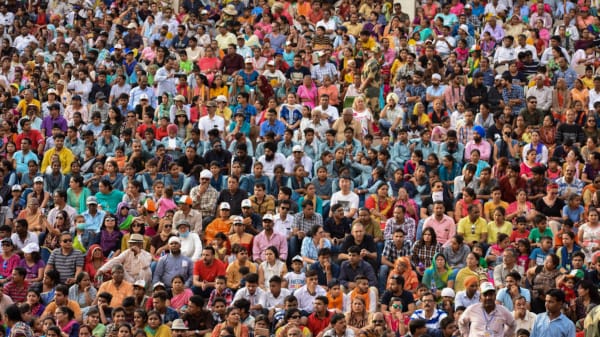
What the protests revealed
A conversation with a family member sharpened this for me. They were implying that not many science students were actually part of the protest. Hardly any, they said. Most of them were from other disciplines entirely. They meant it as a dismissal. I took it as the point.
Because a huge chunk of the youth who took to the streets were not NEET aspirants at all. Some of them were young people who had never even had the chance to aspire. Most of them were young people who had felt betrayed by a generational system that told them, pursue this one pathway, and only then can you defeat your family’s poverty. No one had ever stood by them and said, “pursue your dreams, we will help you get there. And if you fail, or if we fail you, we will figure out something else together. Your dreams are not out of your reach.”
That is exactly what these protests were about. Those dreams. A generation that moves from exam to exam, unable to see anything else available to them. If the exam does not work out, another year is gone. And then another exam. State services, sub-inspector posts, whatever comes next. Some of my own colleagues spent three to five years preparing for exams like this, plan A collapsing into plan B collapsing into plan C, until there was nothing left to fall back on.
The scale of this is not anecdotal. In 2025, roughly 34 lakh candidates registered for the SSC CGL exam for about 10,000 posts, a success rate under 1 percent. Around 10 to 13 lakh candidates apply every year for the UPSC Civil Services Examination for roughly 1,000 vacancies, an overall success rate of less than 0.1 percent. The Railway Recruitment Board has drawn close to a crore of applications for around 50,000 vacancies in a single cycle. A young person sometimes spends years together preparing for one single exam. That exam becomes a beacon of hope, for themselves, their families, and their community at large. And when these exams are cancelled, or their efforts are gone in vain, a generational cycle of missed opportunities surfaces because they have no backup plans.
Why the problem is bigger than one exam
For a country like India, where good education is considered the pathway toward good pay, and that is the holy grail to emerge out of generational poverty, the last month was a mirror to all of us working in this space.
The 2025 Periodic Labour Force Survey puts a number on what the protest made visible on the streets. Close to a quarter of India’s youth between 15 and 29 fall into the NEET category, neither employed, nor in education, nor in training. Youth unemployment sits at 9.9 percent, more than three times the overall rate, and climbs to 13.6 percent in urban India. Only about 4 to 5 percent of India’s workforce has received any formal vocational or technical training. And the informality behind India’s headline employment numbers keeps deepening. Nearly 73 percent of India’s workers remain in informal employment, and the own-account and small enterprise work that once gave people something to return to has been shrinking in real terms, with own-account workers earning significantly less over time even as their numbers rise, a sign of livelihoods taken up out of distress rather than choice.
We built an education system that never took alternate livelihoods seriously. Not as a fallback, but as a legitimate, dignified way to live. For an earlier generation, informal and own-account work gave people something to return to when the formal path did not open up. That capability has thinned out for the young people we work with today, and we pulled it away without ever putting something equally respected in its place. We told them, instead, that being educated meant one thing: a high-paying urban job, or nothing. That is precisely the gap that has caused this anger, and the numbers confirm what the streets were already saying.
What we could have done
For over a month, I have sat with a feeling I can only describe as a kind of moral discomfort. I asked myself a harder question: what solutions were we offering, and what right do we have to ask anything of government or corporates if we were not willing to show up ourselves.
This discomfort asked me to speak with more young people, not just as an interaction, but as a mode of introspection. I met a student from an evening commerce college who worked as a delivery person. I sat with him, and with others like him, and I did not hear disengagement. I heard about resourcefulness. I heard determination. I heard young people who had run out of alternatives, not young people who had run out of will.
IDR raised a version of this same question recently in an open letter to India’s civil society organizations, arguing that civil society’s real influence lies not just in its reach but in what it is willing to stand for. I think that applies as much to organisations like mine as it does to any movement on the street. It is easy to write posts about solidarity. It is harder to ask whether we showed up when it mattered, and whether we used the moment to do the work we say we care about.
I also think it was a moment where we could have sat with the youth, spoken to them about their aspirations and mobilised them into the streams of work we all have been working toward.
We could have walked in and talked to them about what needs to be done. We could have held ourselves equally accountable, and asked what more we need to do so that our youth does not carry this weight of hopelessness alone. We could have treated this as a mobilisation moment for the change we say we want, instead of watching it from a distance and calling that neutrality.
Where the work takes us
There is a version of this conversation that keeps getting reduced to the job roles we have collectively decided are worth aspiring to. I work closely with organisations pitching exactly those programmes, so I understand the pull. But that is not the fundamental gap.
The fundamental gap is that we are not asking whether farming itself can be a viable, dignified livelihood again, through mechanisms like carbon credits that put real value on land stewardship. We are not asking whether local service work, the kind that takes two or three days to complete rather than fitting into a single formal job description, can carry the same respect we hand to a government post or a corporate role. This is not a textbook fix alone, though textbooks matter, starting from grade one, in what they tell children is possible. It has to be a mass movement in how we talk about work itself.
If we are serious about hyperlocal skilling, this is the piece we keep skipping: not just training people for the jobs that exist nearby, but rebuilding the social respectability of the livelihoods that were always there, so that choosing them is not a consolation prize but a legitimate first choice. That means treating farms, local trade, and community service roles as first choices, not fallback plans. It means showing up in the places where young people are asking these questions, not just responding to them online.
To the young persons still studying for an exam that may or may not open a door for them, I want to say this - “your worth was never tied to a rank list. I saw you, and I am sorry it took this long for people like me to really look.”
I do not have an answer but way too many questions. But I think we owe it to these young people to ask these questions properly, and to start building the alternatives we have talked about for years instead of merely talking about them.
Filed under
Cite this article
Gayathri Vasudevan (2026) ‘What the youth asked us all’, India Together, 2 August 2026. https://indiatogether.org/youth-protests-education/